







Commercial Truck Buyers Near Me: Dealer, Auction, or Direct; What Gets You the Most?
When truck owners search for “commercial truck buyers near me,” they usually assume the best option is the closest one. In reality, selling a commercial truck is less about geography and more about understanding who values that truck the most. Dealerships, auctions, listing platforms, and specialized buyers all operate very differently, and the choice you make can dramatically affect both the price you receive and the time it takes to complete the sale. Understanding how each option works helps owners decide which route makes the most sense for their truck, their timeline, and their situation.
11 Ways to Sell a Commercial Truck (And What Each Option Really Means)
- Local Truck Dealership
A dealership is often the first place sellers think of when searching for truck buyers nearby. However, dealerships primarily focus on selling trucks, not buying them. Their offers usually account for reconditioning costs, inventory risk, and the time required to resell the unit. - Trade-In at a Dealer
Trading in a truck while purchasing another is convenient, but it rarely produces the highest price. Dealers generally discount trade-in values because they must prepare the truck for resale and still maintain a profit margin. - Commercial Truck Auctions
Auctions are common for fleet liquidations and estate situations. The truck sells for whatever bidders are willing to pay that day, which means the price depends heavily on who happens to be participating in the auction at that moment. - Online Truck Listing Platforms
Sites like Truck Paper or Commercial Truck Trader expose a truck to buyers nationwide. The tradeoff is time and effort, since sellers must answer inquiries, manage negotiations, and sometimes wait months for the right buyer. - Selling to Another Fleet Operator
Sometimes regional fleets buy used trucks directly from other operators. These transactions can work well when the truck matches their operational needs, but finding the right buyer often requires time and industry connections. - Independent Truck Brokers
A broker can help locate buyers and negotiate deals, especially for specialized trucks. However, brokerage fees or commissions may reduce the final amount the seller receives. - Local Repair Shops or Mechanics
Occasionally shops buy trucks for parts or resale. Their offers tend to reflect parts value rather than full operational value, especially if the truck needs significant repairs. - Salvage or Scrap Buyers
When a truck is severely damaged or non-running, salvage buyers may purchase it primarily for parts or scrap metal. While convenient, this option typically produces the lowest payout. - Export Buyers
Certain truck configurations have strong demand in international markets. Export buyers sometimes pay competitive prices, but arranging these transactions can involve additional logistics and paperwork. - Direct Specialized Truck Buyers
Companies that specialize in purchasing commercial trucks often have a deeper understanding of parts markets, fleet demand, and export opportunities. That specialized knowledge can translate into stronger offers because the buyer already knows where the truck fits in the market. - Nationwide Direct Buyers with Pickup Included
A buyer operating nationally can evaluate trucks based on broader market demand rather than just local resale potential. In many cases, they also handle transport logistics and payment directly, simplifying the process
Understanding Your Commercial Truck Selling Options
When it's time to sell a commercial truck, the first search most people run is "commercial truck buyers near me." It's a reasonable starting point. But the results that come back (dealerships, auction houses, online listing platforms, and direct buyers) don't all lead to the same place. They lead to very different outcomes in terms of what you get paid, how long it takes, and how much friction you have to deal with along the way.
This is a guide to understanding those differences honestly, so you can make the decision that actually makes sense for your situation.
Why People Search "Near Me", And What They're Really Looking For
The "near me" instinct makes sense. Selling a commercial truck isn't like selling a car. These are big, heavy assets. Coordinating inspection, transport, and payment is a real logistical consideration. People naturally assume proximity matters.
What they're actually looking for underneath that search is something slightly different: a buyer who is accessible, responsive, knows what they're looking at, and isn't going to waste their time. That description doesn't belong exclusively to someone with a lot down the street. It describes the right kind of buyer, regardless of where they're located.
Kelly Truck Buyers is based out of the Chicago area but purchases commercial trucks nationwide. They've been doing it long enough to understand that a seller in Texas or Florida or the Pacific Northwest deserves the same straightforward process as one in the Midwest. The logistics of picking up a truck are handled anywhere in the lower 48 states, and are always included in the quote; no hidden fees or surprises. Getting a fair number from someone who understands the market is the harder part, and almost always the more important one.
Option One: Selling to a Dealership
The most obvious route for someone searching "commercial truck buyers near me" is a dealership. There's usually one not far away, and they buy trucks. But there's an important distinction to understand about how dealerships work.
Most dealerships are in the business of selling trucks, not buying them. When they take a truck in, they're doing so because it fits their inventory needs or because it came in as part of a trade. Their offer reflects that. They're going to price in reconditioning costs, their margin, the time it takes to move the unit, and the possibility that it doesn't sell. You're not their primary customer in that transaction; the next buyer is. Since they almost never know who that will be, their pricing will logically reflect that.
There's also the specialization issue. A general truck dealership that sells Class 8 sleepers, flatbeds, dump trucks, and box trucks isn't necessarily deep on market intelligence for each of those categories. The person making the offer on your aging Kenworth day cab may be working off a general sense of the market rather than a precise understanding of what that specific configuration is worth to a parts buyer, a regional fleet, or an international exporter right now.
Dealerships aren't a bad option if you have a late-model truck in clean condition that slots neatly into their inventory. If your situation is more complicated than that (an older truck, high mileage, mechanical issues, a specialized configuration), the offer will reflect their risk and uncertainty more than your truck's actual value.
Option Two: Auctions
Auctions are a common path for commercial trucks, particularly for fleet liquidations and estate situations where moving multiple units quickly is the priority. But "quickly" and "for the most money" are not the same thing, and it's worth being clear about what an auction actually does and doesn't do for a seller.
At auction, your truck sells for what someone in that room (or online) is willing to pay on that day. If the right buyer isn't there, or if market conditions are soft in that window, the number suffers. You also pay fees: seller's premiums and transport to the auction site can take a meaningful bite out of whatever you get. And unlike a direct sale, there's no negotiation, no back-and-forth, no opportunity to provide context about the truck that might move the number.
Auctions work well when volume matters more than maximizing the value of any individual unit. For a single-truck owner-operator or a small fleet operator trying to get the best outcome with one or two vehicles, they're rarely the optimal path.
Option Three: Listing Platforms
Sites like Commercial Truck Trader and Truck Paper give sellers national exposure. For a clean, desirable truck, that exposure can generate competitive offers. The tradeoff is time and effort. You'll handle inquiries, answer questions from buyers who may or may not be serious, deal with out-of-state complications, and wait out a timeline that can stretch into months depending on the market.
Listing platforms make the most sense for sellers who have the flexibility to wait, the patience to manage the sales process themselves, and a truck that photographs well and tells a clean story. If the truck has issues, if the title situation is complicated, or if time is a factor, the listing route adds friction rather than removing it.
Option Four: A Direct Buyer Who Specializes in Commercial Trucks
This is where the calculus changes for most sellers. A direct buyer like Kelly Truck Buyers isn't building inventory for a lot and isn't averaging out risk across dozens of units. They're making an offer based on a specific understanding of where that truck has value; in the parts market, as a working unit for a regional buyer, as export inventory, or as a candidate for refurbishment.
Jim, who handles commercial truck acquisitions for Kelly Truck Buyers, has spent years developing the kind of market knowledge that translates into better offers. He understands what a Cummins-powered Peterbilt is worth to a parts distributor in the current market. He knows what seasonal demand for dump trucks in the construction sector looks like. He knows which configurations have strong export demand and which ones are soft right now due to tariff conditions or fleet oversupply.
That depth of knowledge is what separates a direct buyer who specializes from every other option. It doesn't just make the process easier; it puts more money in the seller's pocket, because the offer reflects actual market value rather than a generalist's conservative estimate.
What Kelly Truck Buyers Actually Buys
One reason sellers undervalue their trucks before they even pick up the phone is the assumption that their truck doesn't qualify. It's too old, too rough, not running, missing parts, title is complicated. Kelly Truck Buyers has heard it all, and the answer is almost always the same: call anyway.
The company buys across the full spectrum of commercial trucks: semi-trucks and Class 8 tractors, whether running or not; dump trucks, flatbeds, and vocational trucks; box trucks and straight trucks; refrigerated units and specialized configurations; fleet vehicles; single-owner-operator units; and everything in between.
Condition matters to the offer, but it rarely disqualifies a truck entirely. A truck that isn't running still has an engine, a transmission, and an axle configuration; all of which have value in the right market. A truck with a title complication isn't automatically a dead end. These are exactly the situations where working with a direct buyer who knows the landscape produces a better outcome than any other option.
It's worth going a level deeper on what "condition matters to the offer" actually means in practice, because sellers often make assumptions that work against them.
A truck that hasn't moved in two years, sitting on a property with flat tires and a dead battery, isn't necessarily worth a fraction of what it would have fetched running. The drivetrain components, the frame, the axles, and the cab configuration; all of these retain value independent of whether the truck starts. What changes is where in the market that value gets realized, and a buyer with access to a national parts network can often find that destination more efficiently than a local shop or a general buyer can.
Similarly, high mileage is a factor, not a death sentence. Commercial trucks are built to accumulate mileage, and buyers who understand the market know the difference between a truck that has been maintained through 600,000 miles and one that was neglected through 300,000. The maintenance history, the engine brand, the spec configuration, and the overall condition of wear components all factor into what a truck is actually worth. Sellers who assume their high-mileage truck has no buyers are often surprised by the number they receive when they call.
Specialized configurations deserve particular mention. A vacuum truck, a concrete mixer, a refrigerated straight truck, a specialized flatbed with custom rigging; these aren't units that fit neatly into a general buyer's framework, which is part of why they're often undersold. Kelly Truck Buyers' familiarity with vocational and specialty segments means those configurations get evaluated on their actual merits rather than discounted because they fall outside a standard category.
Fleet situations are also worth noting. When a company is winding down operations, restructuring, or simply rightsizing its rolling stock, selling multiple units at once presents its own challenges. Coordinating logistics, ensuring consistent documentation, and getting offers that reflect the collective value rather than a discounted bulk rate requires a buyer capable of handling the volume and the complexity. Kelly Truck Buyers works with fleet operators of all sizes, from small regional carriers with a handful of units to larger operations with dozens of trucks to move.
How the Process Works
Selling to Kelly Truck Buyers doesn't require the seller to become a logistics expert. The process is built around the reality that truck owners are busy people who aren't looking for a second job managing a sale.
The starting point is a conversation. Sellers call 800-790-1686 and provide basic details about the truck: make, model, year, mileage, condition, and current situation. You are most likely to get Faith or Michelle, and they usually have a few basic questions. From there, Jim and his team develop an offer based on current market conditions. That offer isn't generated by an algorithm or pulled from an automated pricing tool. It's built on Jim's direct knowledge of what buyers in specific markets are paying right now for specific configurations, which is a meaningfully different thing.
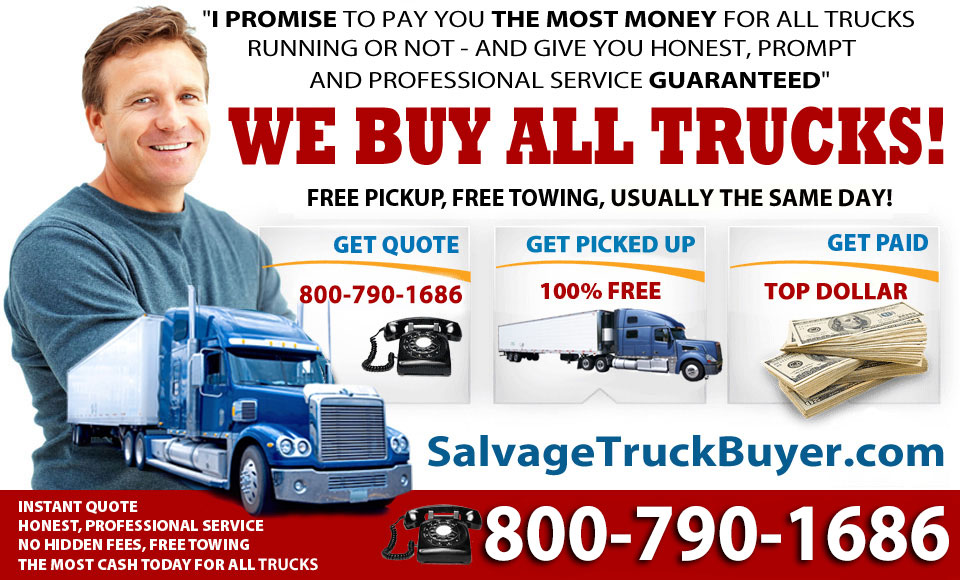
If the offer works, Kelly Truck Buyers handles the logistics of pickup and payment. The seller doesn't have to haul it anywhere, post listings, or field calls from strangers. Towing is included at no additional charge, regardless of where the truck is located in the lower 48, and there are no fees deducted from the agreed price after the fact.
Payment is made upon completion of the pickup, not weeks later. For sellers who have dealt with slow-pay buyers or auctions that take their time cutting a check, reliability matters more than it might seem at first. The transaction is designed to be complete, not the beginning of a follow-up process.
Title situations that might seem complicated are handled with the same directness. Missing titles, salvage titles, estate situations where paperwork is in transition; these aren't automatic disqualifiers. The right approach is to describe the situation honestly during the initial call so that the team can account for it accurately in the offer and the logistics.
For sellers dealing with fleet liquidations or multiple units, the process scales accordingly. Kelly Truck Buyers works with companies managing everything from 2 trucks to large fleets, and the approach is the same: a fair offer based on real market knowledge and a transaction completed without unnecessary delay.
The "Near Me" Question, Answered
When someone types "commercial truck buyers near me" into a search engine, they're actually looking for a buyer who feels accessible, trustworthy, and knowledgeable. Geography is a proxy for those things, not the thing itself.
Kelly Truck Buyers is a second-generation family business with an A+ BBB rating and a national operating footprint. They buy trucks from sellers across the country using the same process, market expertise, and commitment to making the transaction straightforward. The company Mike built twenty years ago is now run by his daughter, Michelle, and son-in-law, Jim, and the values that made it worth passing down are the same ones that make it worth calling.
If you have a commercial truck to sell (whether it's running or not, whether the situation is clean or complicated), the right move is to find out what it's actually worth before you commit to any other path. Call Kelly Truck Buyers at 800-790-1686 and let the market tell you the number.